
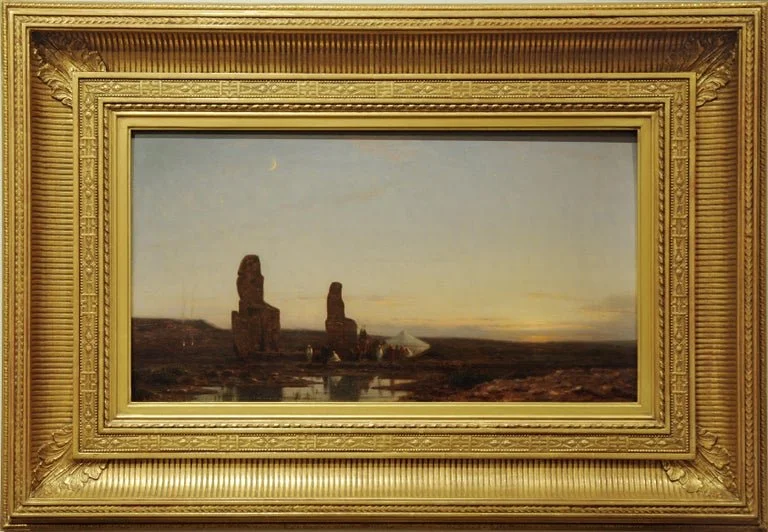
 Image 1 of 2
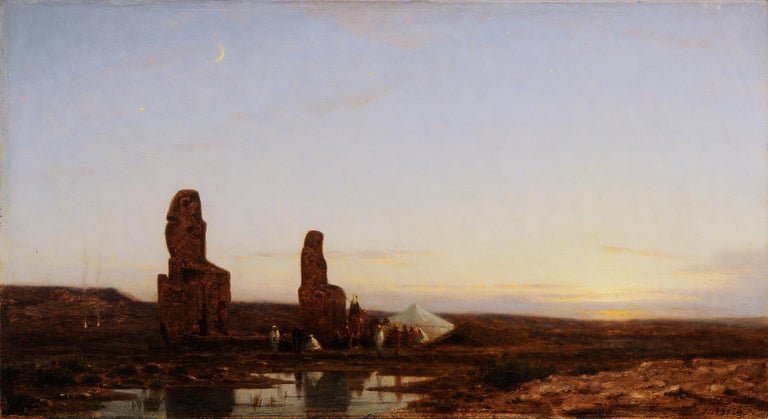 Image 2 of 2
Artist Bio
A pupil of Cogniet and Durand, Amédée Rosier started out at the Paris Salon in 1857 with a history painting called Combat naval devant Sébastopol. His first views of Venice and North Africa appeared in 1864. He received a third class medal in 1876 with La Lagune, le soir and Venise, le Grand Canal. He was awarded with a bronze medal at the Universal Exhibition in 1889. His landscapes are shown to their best advantage thanks to his obvious colourist talent. This travelling artist painted in Holland, in the South of France, at Constantinople, and Egypt, where he magnificently portrayed the atmospheres of each country.
Rosier was among the many European painters who traveled to North Africa at the turn of the century, a part of the current known as Orientalism. The French Society of Orientalist Painters was founded in 1893, with Jean-Léon Gérôme as the honorary president. The formation of the French Orientalist Painters Society changed the consciousness of practitioners towards the end of the 19th century, since artists could now see themselves as part of a distinct art movement. As an art movement, Orientalist painting is generally treated as one of the many branches of 19th-century academic art; however, many different styles of Orientalist art were in evidence. Art historians tend to identify two broad types of Orientalist artist: the realists who carefully painted what they observed such as Gustav Bauernfeint; and those who imagined Orientalist scenes without ever leaving the studio. French painters such as Eugène Delacroix (1798–1863) and Jean-Léon Gérôme (1824–1904) are widely regarded as the leading luminaries of the Orientalist movement.