
 Image 1 of 2
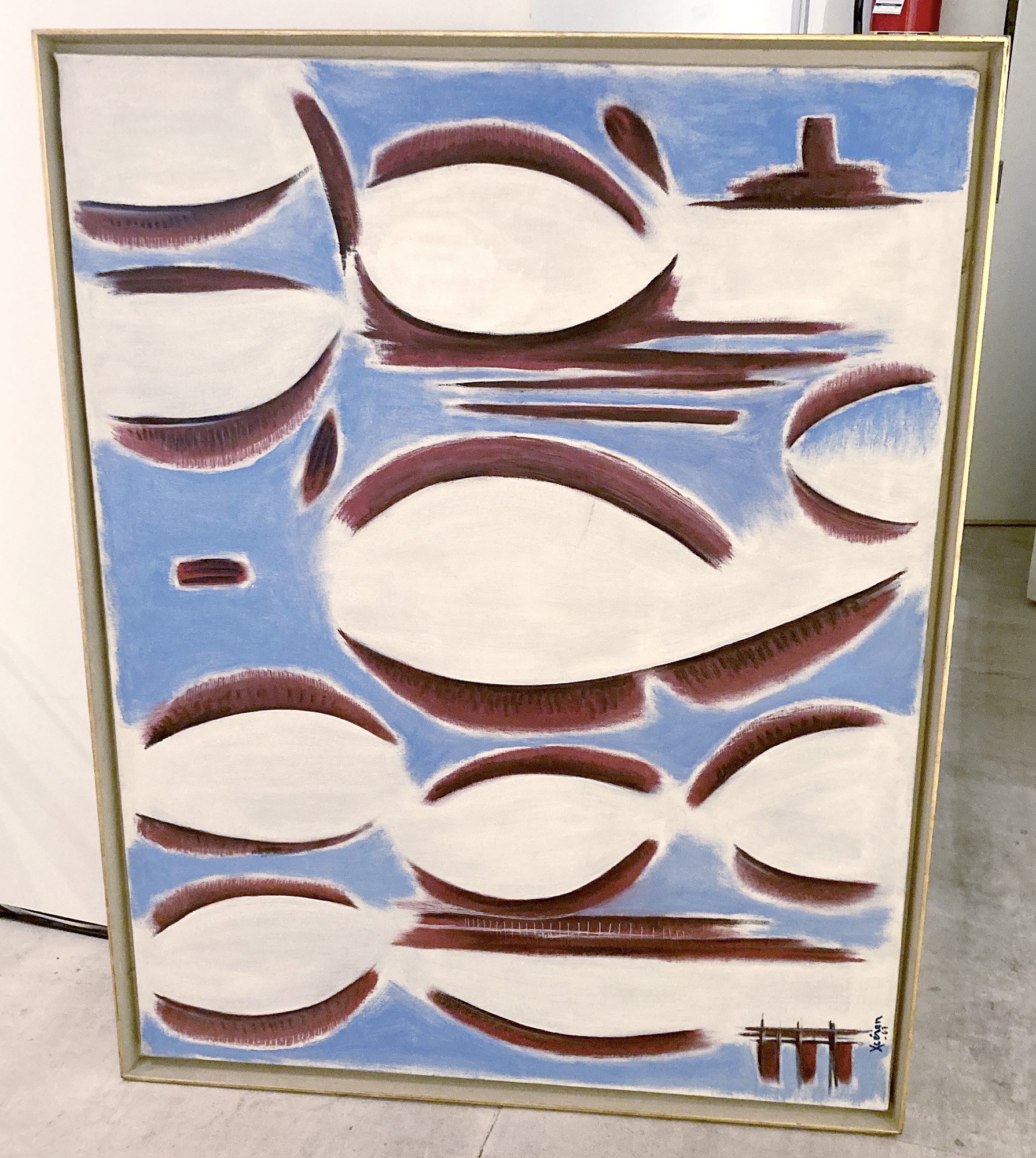 Image 2 of 2
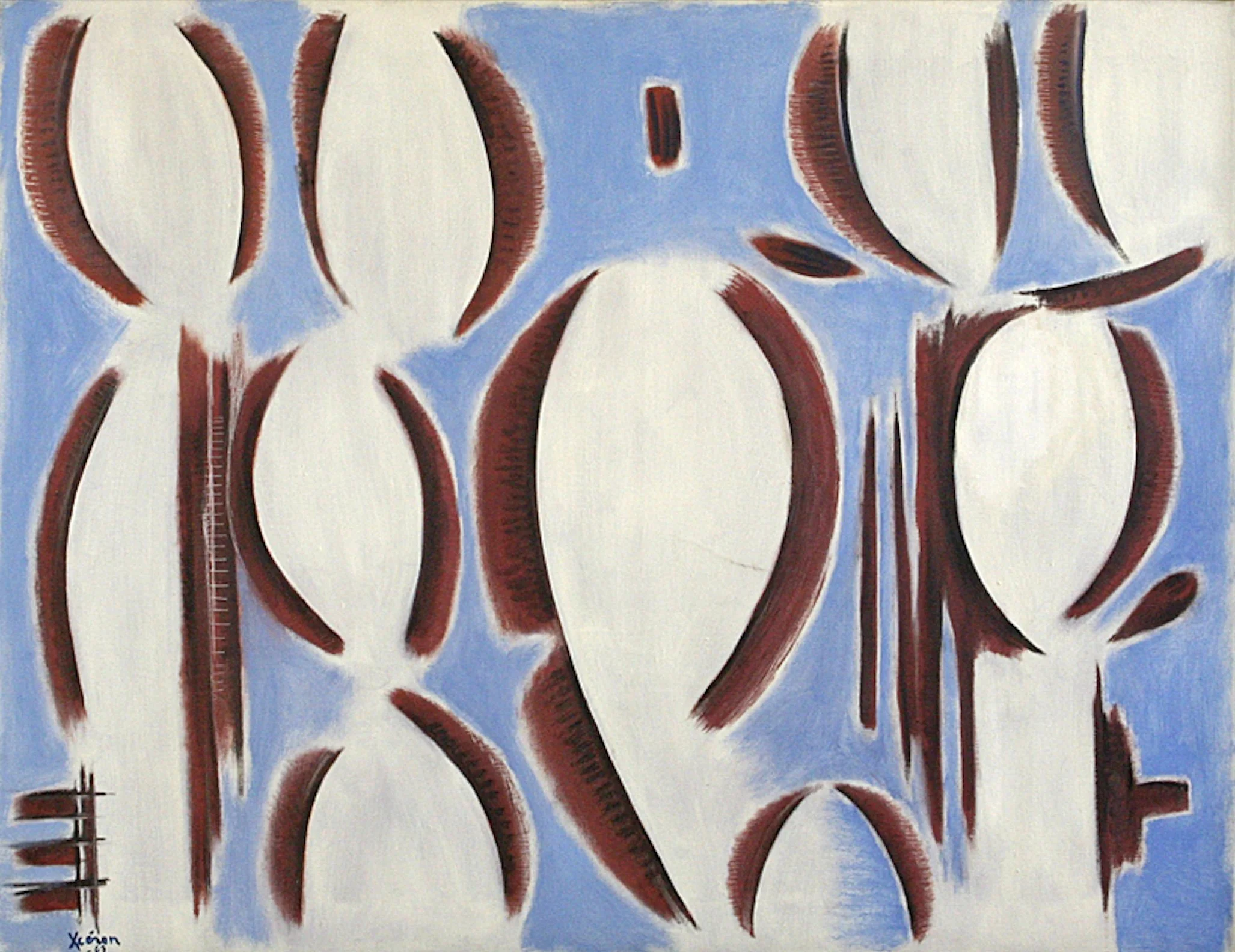
About the Painting
The current work presents a theme that Xceron frequently reworked and revisited, starting with somewhat cubist-looking human figures and gradually evolving them into full abstraction by isolating only the bodies' curved lines. Similar examples exist of arrangements of simple, bold curves against expansive color fields. They seem derived from earlier modernist figure studies, such as "Figures at sea, 1961" and "Golden images, 1962," where the progression from the female nude to complete abstraction becomes undeniably apparent.
Artist Bio
Jean Xceron (1890 – 1967) is a modernist artist who was born in Isary, Greece with the birth name of Yiannis Xirocostas. In 1927, he went to Paris to further his art career, which included studying at the Ecole des Beaux Arts; he remained for ten years, leaving as World War II approached. He earned money by writing art reviews for the European editions of the Chicago Herald Tribune, the New York Herald Tribune, and the Boston Evening Transcript. In this capacity, he became a link as a writer between the European avant-garde and the American public. But he also did much artwork that aligned him with the French modernist movements, and by the time he returned to the United States, his work was totally abstract. Xceron's work was added to the collection of the Museum of Modern Art; he received a mural commission for Riker's Island under the Federal Art Project; and in the 1940s and 1950s, he was employed in a Registrar capacity by Hilla Rebay at the Solomon R. Guggenheim Museum. In that position, he was able to do his own painting as well in his spare time, and he had gallery exhibitions and regular exposure at the Guggenheim in their non-objective shows. In the late 1940s and early 1950s, his work reflected Abstract Expressionism such as in the painting commission, Radar, he did for the University of Georgia.