
 Image 1 of 6
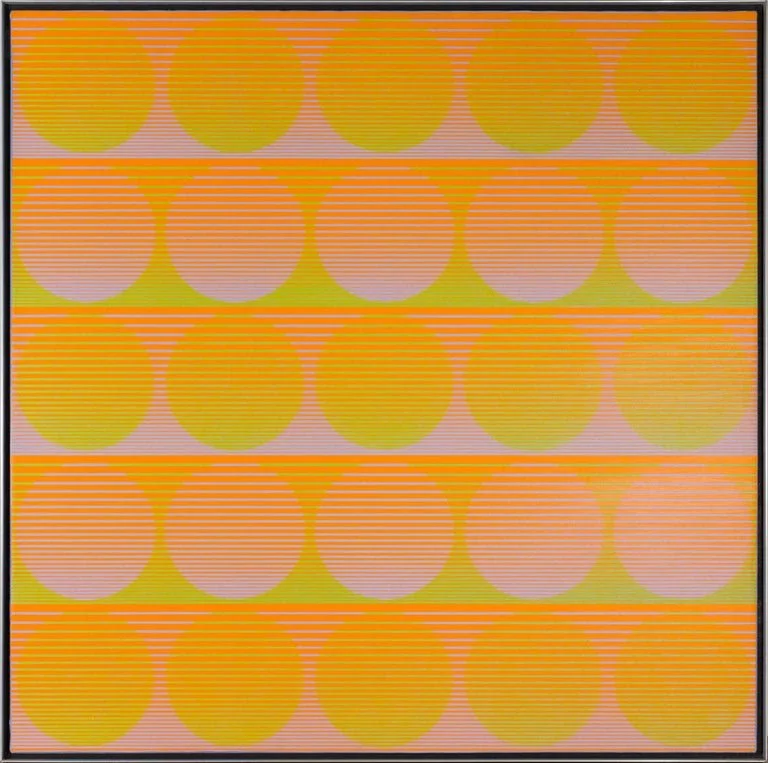 Image 2 of 6
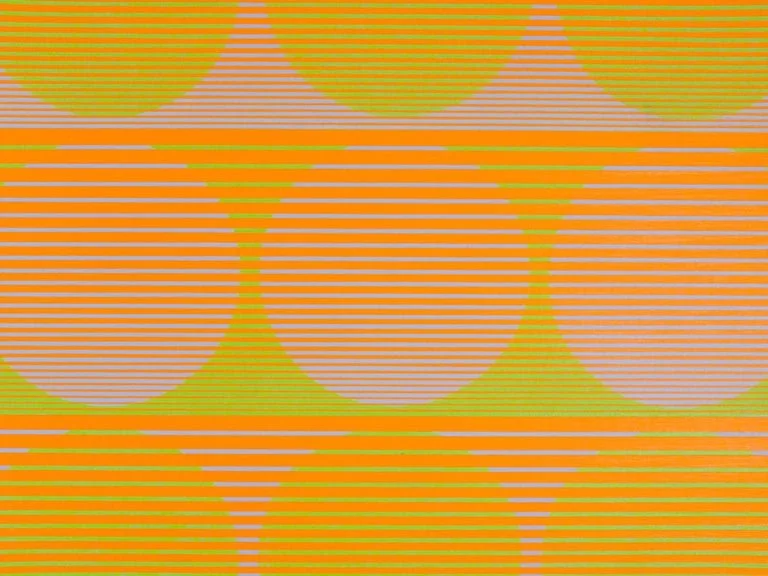 Image 3 of 6
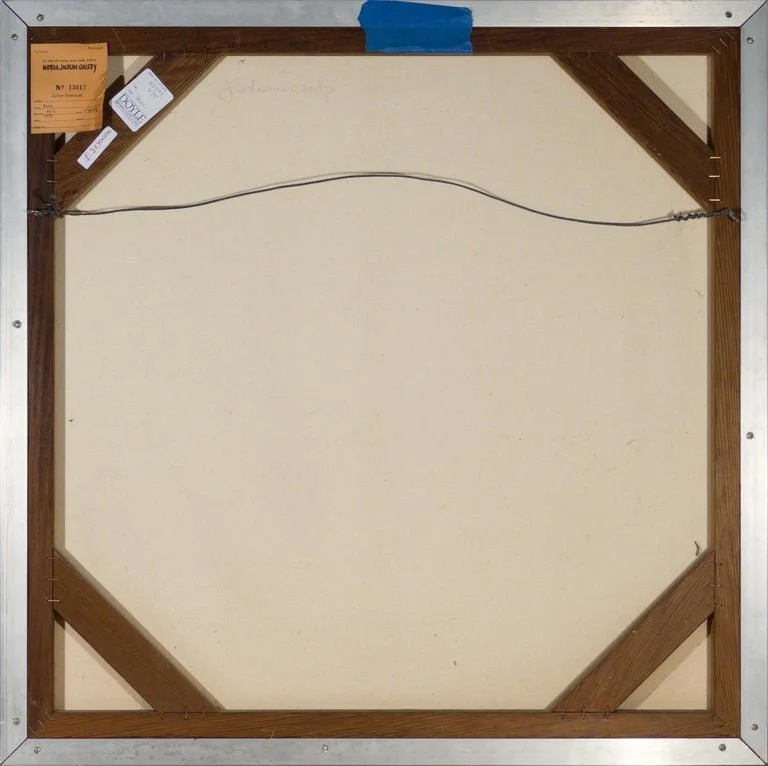 Image 4 of 6
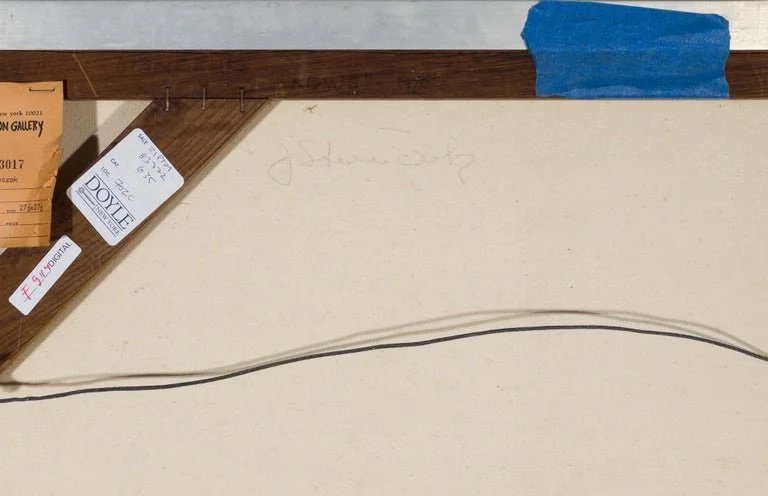 Image 5 of 6
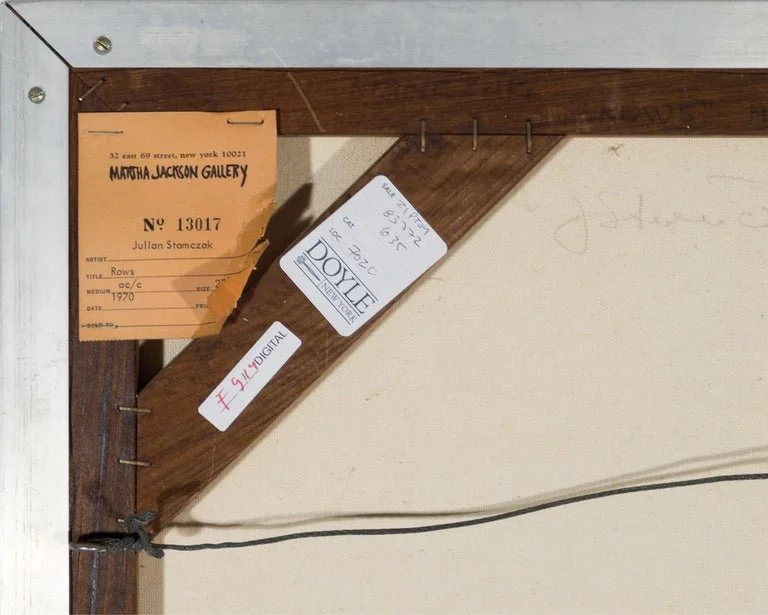 Image 6 of 6
Provenance:
Martha Jackson Gallery New York
Private Collection
Purchased in 1971 by estate
About the Artist:
Julian Stanczak is one of the key founders of Op Art, an artistic movement that was most prominent in the 1960s.
The title of Julian Stanczak’s first solo show in New York was meant to stir up controversy. “Optical Paintings” managed to do just that, with the ensuing media uproar coining the iconic title of the Op Art movement. But Stanczak never fully accepted that title. Even after becoming renowned as an Op artist, even after exhibiting at the Martha Jackson Gallery and MOMA for his involvement with this movement, he pointed out in an interview that it doesn’t fully encompass the depth of his work: “it diminishes the seriousness of the artist's search, the hard work and convictions - regardless of the visual form that it might take.”
One has only to look at Stanczak’s early life, experiencing trial and tragedy, to understand what search the artist might be talking about. As a child lost in the chaos of WWII, Stanczak survived a Siberian labor camp, escaping at the age of only 13 with severe injuries that cost him the use of his right arm. Starting a new life in America, he had to teach himself to paint with his left hand, even as he studied at the Cleveland Institute of Art and at Yale University, before becoming a teacher at the former. But he also had to teach himself to forget the past and live a normal life.
Art played an important part in the process of healing, but not by giving himself - as is too often the stereotype - to the outpour of emotions onto the canvas. Stanczak took a different approach, through focus and restraint. “In the search for Art,” he says, “you have to separate what is emotional and what is logical. I did not want to be bombarded daily by the past, I looked for anonymity of actions through non-referential, abstract art.”
It doesn’t take an expert to see in Stanczak’s work an ardent search for stability and order, a world that the artist could entirely control, but one that is simultaneously beautiful, free and vibrant. By creating order, one can feel a sense of empowerment and potency in a world that is full of chaos. A sense of taking charge of one’s own destiny becomes manifest in methodical physical actions; Stanczak’s process required precisely taped layers, often with fine details, strictly rendered and unmasked in sequential order. But all that precision does not stifle, on the contrary, it sets a perfect setting for vibrant color to take center stage unhindered, while the artist is fully immersed in the “investigation of human perception” - in Stanczak’s own words - which probes into the very essence of human experience in the physical world.
About the Painting:
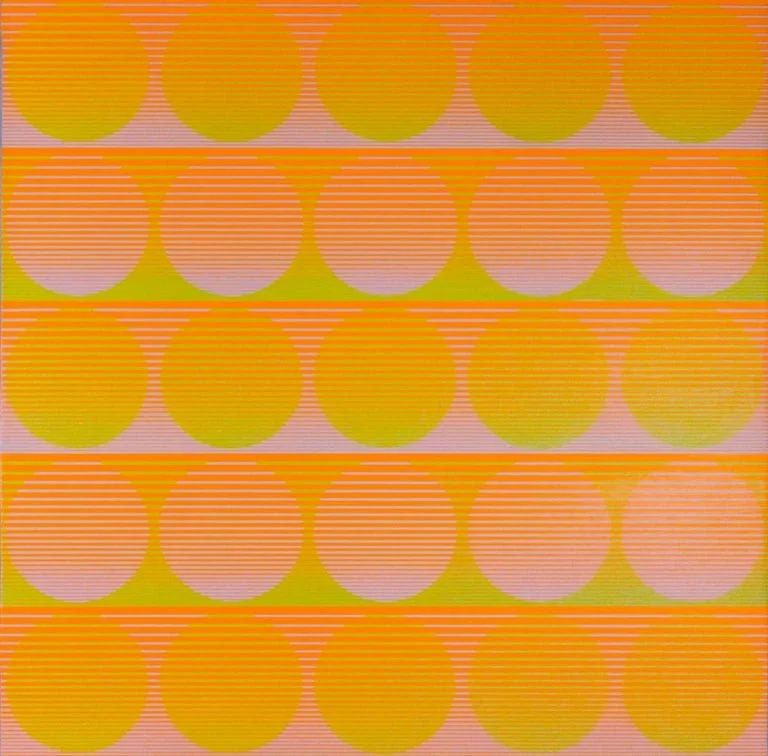
In his work, Stanczak uses gridlike patterns and geometrical compositions to simulate a sense of movement through a particular arrangement of shapes and lines. His innovation was heavily influenced by Abstract Expressionism. In the acrylic painting "Rows," the most important element for Stanczak is color. With just three tones - a bright orange, a lively green, and a blue - the artist is able to simulate variation by juxtaposing varying line weights. The strips of orange, for example, in becoming thinner as they descend down each of the rows, create the illusion of a purple when they mix with the blue background. This painting is, therefore, a distinct meditation on the overlaps between rigidity, color, and expression, a transformation of the practices of other color-interested artists like Mark Rothko. The geometry of Stanczak's "Rows" still gives way to variation and interest.